

EPC Ratings are shifting and some buildings aren't what they seem
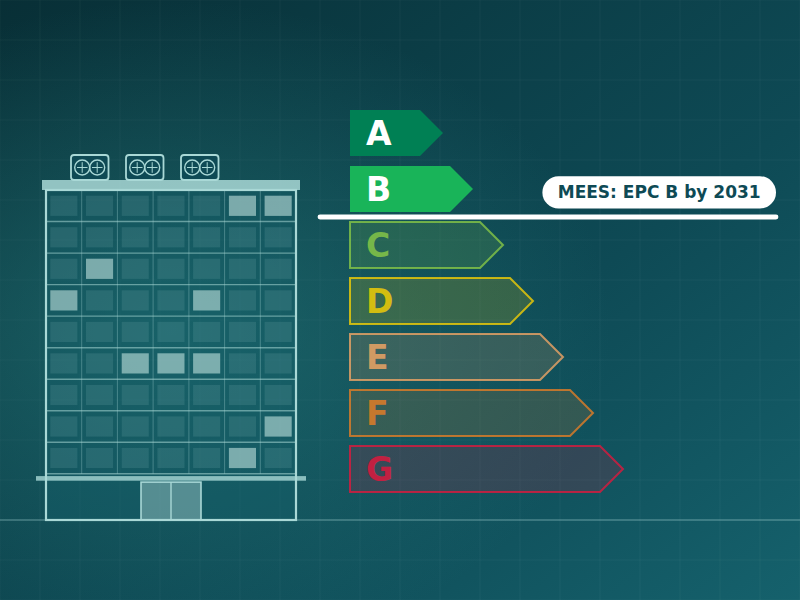
Across multiple portfolios, we’re seeing EPC ratings move sharply. The buildings haven’t changed. The ratings have moved because the carbon emission factors used in older assessments are out of date, or because the assessor made the wrong assumptions.
A recent example involved VRF / heat pump outdoor units. The assessor assumed these provided the building’s primary heating. In reality, they only served local cooling loads, with heating delivered by electric coils in the fan coils. The EPC was lodged as a B, but the true rating was C, an £800k gap in upgrade costs created entirely by incorrect assumptions.
For lenders and investors, these errors directly affect aluation, capex planning and refinancing negotiations.
Why older EPCs can materially misstate performance
In June 2022, a major change to the methodology cut the electricity carbon factor used in building energy calculations from 0.519 to 0.136 kgCO₂/kWh.
This matters because:
- EPCs lodged before June 2022 used the much higher factor, which penalises electrically heated buildings.
- EPCs lodged after June 2022 reflect a grid that is now far cleaner.
- Electrically heated buildings assessed under the old factors can move up a whole EPC band when re-assesed, but only if the building data is correct.
- The Future Buildings Standard is being brought in through 2026 legislation, and the Government's 2023 consultation proposed updated carbon factors
For portfolios with older EPCs, this creates both risk and opportunity; some assets may be closer to compliance than their lodged EPC suggests, while others may be wrongly rated because of incorrect assumptions.
MEES: what’s coming
The UK Government first said it wanted to tighten MEES in March 2021, when it proposed that rented commercial buildings should eventually reach EPC B. Since then, it has said that all rented commercial buildings over 1,000 m² should reach EPC B by 2031, “where cost-effective”. This is the Government’s current intention, but it will need further legislation to bring the 2031 requirement into force.
The interim EPC C step has been removed, and smaller buildings stay at EPC E. MEES already bans the letting of F or G rated buildings, with penalties of up to £150,000. The EPC B requirement aims to cut energy use and speed up decarbonisation, and the Government’s modelling suggests tenants could save £360m a year by 2031.
Exemptions and flexibilities remain (the seven-year payback test, third-party consent, devaluation risk and temporary exemptions), but they don’t change the bigger picture: inefficient buildings may face rising compliance, capex and liquidity risk.
What this means for investors and lenders
Valuation pressure will increase
MEES risk is already showing up in valuation reports as yield softening: valuers are raising yields to reflect compliance risk, which lowers capital values even when rents stay the same.
Refinancing risk is rising
Lenders increasingly require alignment with:
- SFDR energy inefficiency criteria (e.g. triggered below EPC C)
- EU Taxonomy top 15% thresholds (e.g. EPC B or better)
Portfolio triage is unavoidable
Buildings below EPC B will need clear upgrade pathways: HVAC, LED, controls, fabric, renewables.
Smaller buildings still matter
They remain at EPC E, but occupier expectations are rising fast.
A smarter way to manage MEES risk
Commissioning full EPC assessments across a portfolio is costly and often unnecessary, especially when many lodged EPCs are outdated or based on flawed assumptions.
Our EPC modelling tool provides investors and lenders with:
- a review of the current EPC assessment using the latest carbon emission factors;
- an accurate, data-driven upgrade pathway to reach EPC B;
- costed interventions aligned with MEES compliance;
- clarity on whether a lodged EPC is outdated or based on incorrect assumptions;
- a far cheaper and faster alternative to reviewing existing EPC ratings than commissioning formal EPC reassessments by an accredited assessor.
Most investors already hold the information needed to understand their true EPC position. With around ten straight forward building parameters, the kind typically captured in technical due-diligence packs or asset registers, we can remodel the EPC using the latest carbon emission factors and set out a clear, costed pathway to reach EPC B.
Matt Dickinson, Energy & Carbon Consultant
Let us help.
Are you an investor or lender in Real Estate and need support? We would love to help. Use the form below to get in touch with the team or contact us on admin@kingswoodrea.com.